Best 3D Printers for Beginners: 6 Easy First Picks
Disclosure: TechCurated is reader-supported. When you buy through a link on this page, we may earn a small commission at no extra cost to you.
Best 3D Printers for Beginners: 6 Easy First Picks
The Short Answer
The best 3D printer for a beginner is the Bambu Lab A1 Combo. It calibrates itself, prints in four colours straight from the box, and usually turns out a clean first print with no tinkering at all. If your desk is small, or you want the gentlest possible start, the A1 mini Combo gives you the same easy experience in a smaller frame. Every machine in this guide to the best 3D printers for beginners was chosen because it removes one of the usual first-timer headaches, whether that is levelling the bed, loading filament, or getting the first layer to stick. Black Friday is the time of year when beginner printers get the most attention, so check the live listing before you buy, because offers change quickly.
1. Bambu Lab A1 Combo — Our Top Pick
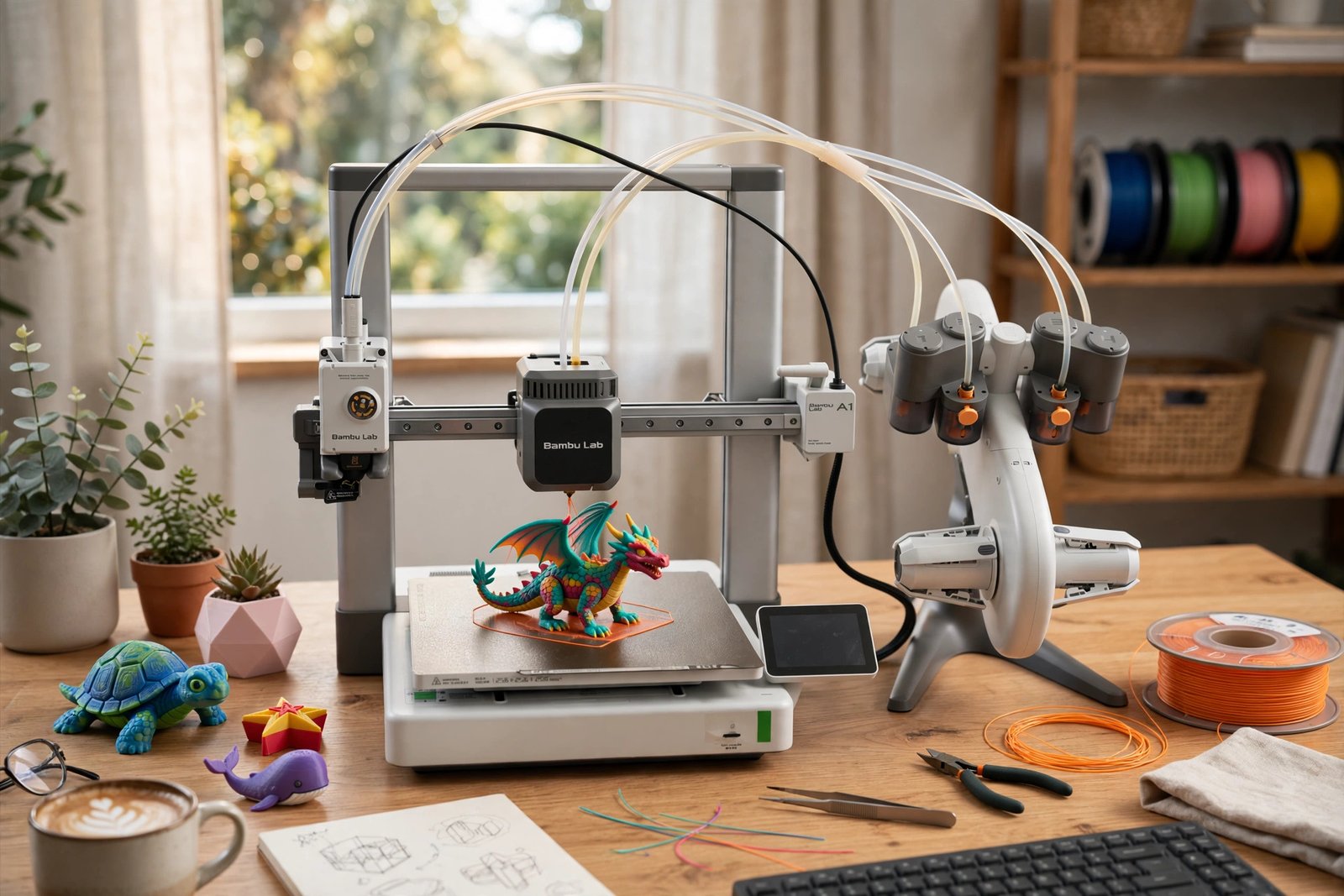
The A1 Combo is the full-size Bambu starter, with a build space of 256 mm in every direction and a four-spool colour unit that sits on top and feeds filament automatically. It levels its own bed, checks the nozzle, and adjusts the flow as it prints, which is why so many first prints just work. Colour is the real joy here. You can print a toy with a red body and blue wheels, or a plant pot with a two-tone rim, without swapping spools by hand. It is also quiet enough to run in the same room while you work. This printer is for someone who wants colour printing from day one and a machine that stays out of the way. It is not for someone who plans to print tough engineering plastics every week, because the open frame lets heat escape, and those materials prefer a warm enclosed chamber. Compared with the A1 mini Combo below, you get a much bigger build area and the same easy setup, so large models like helmets and tall vases are suddenly possible.
2. Bambu Lab A1 mini Combo — Best for Small Desks
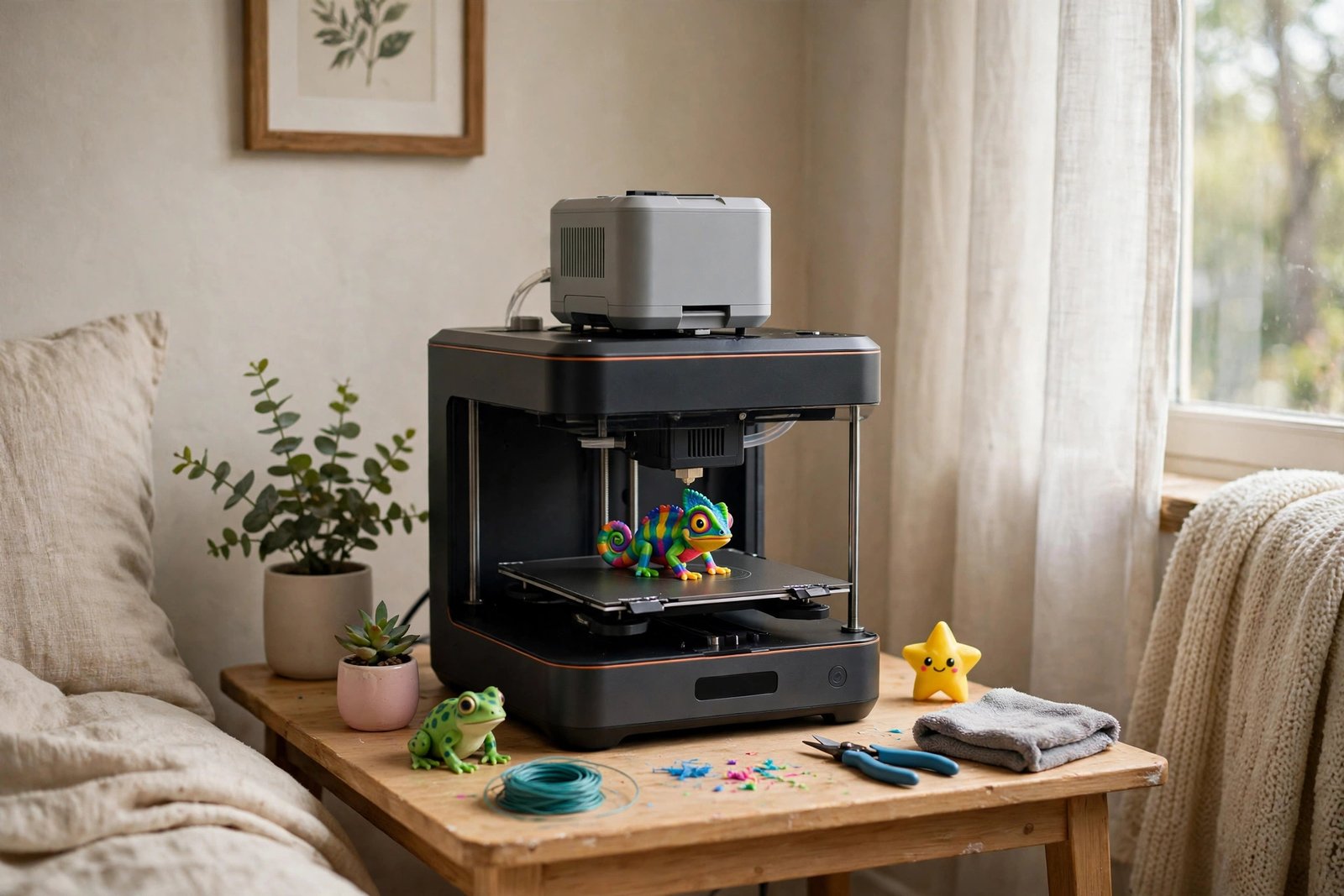
The A1 mini Combo is the same idea shrunk down to a 180 mm cube, and it is one of the best 3D printers for beginners if your desk is small, or if the printer is going in a bedroom or a classroom. Setup takes about twenty minutes, the machine calibrates itself, and the colour unit still gives you four colours to play with. Its small size is a feature, not a flaw, because it sits happily where a full-size printer would dominate the room. This printer is for kids, students, and anyone who wants to learn the hobby without committing a whole desk to it. It is not for anyone already dreaming of big cosplay armour or large planters, because those simply will not fit. Compared with its bigger sibling, you trade build space for a smaller footprint and a gentler learning curve, and most first projects fit easily anyway.
3. Bambu Lab P1S Combo — Best Enclosed Pick
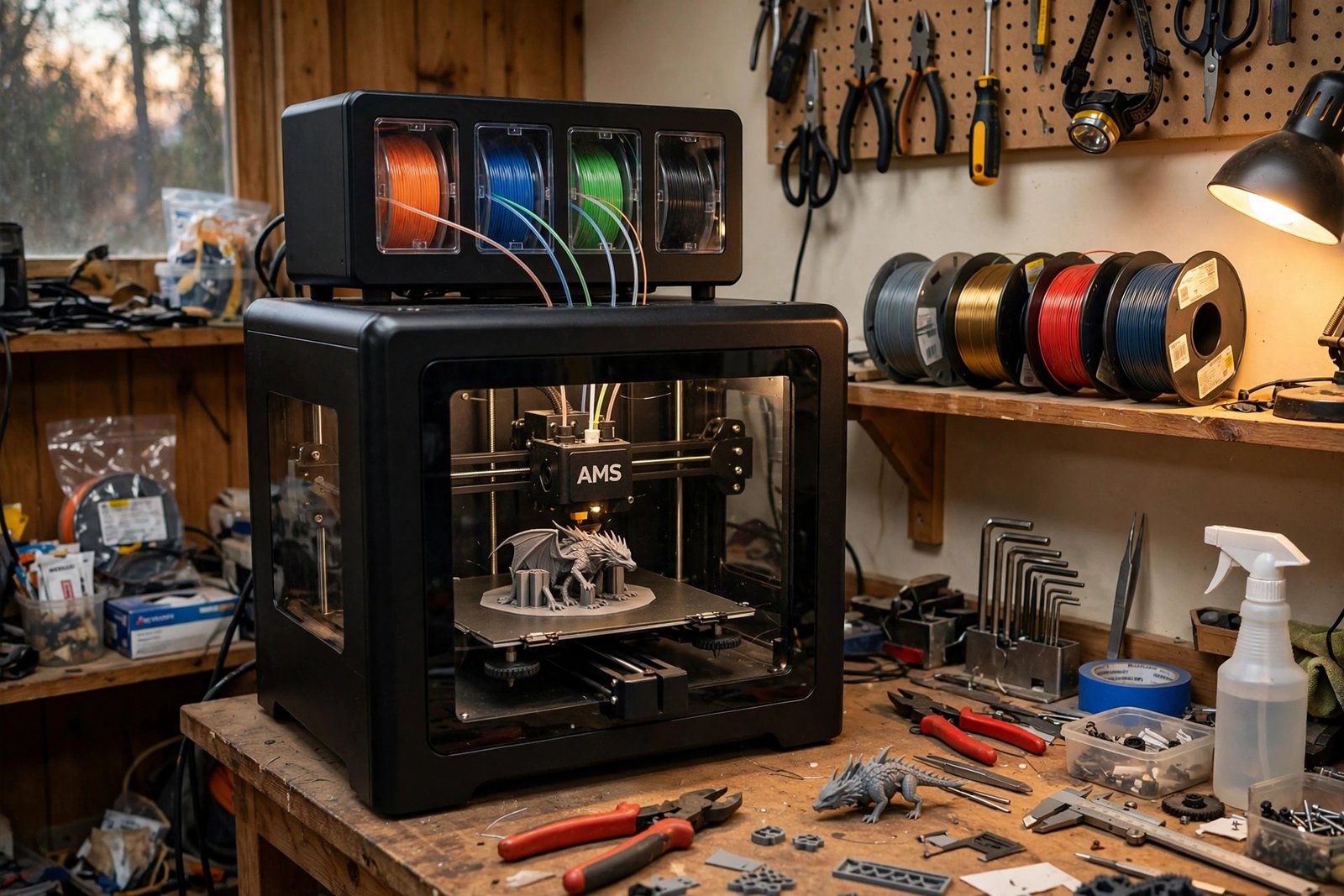
Among the best 3D printers for beginners, the P1S Combo is the one that grows with you. Its cabinet keeps heat in and noise down, the CoreXY motion system moves fast, and the colour unit can grow from four colours to sixteen with extra units. Auto bed levelling is standard, and the 256 mm build cube matches the A1 Combo. This printer is for someone who suspects 3D printing will become a real hobby and wants a machine they will not outgrow in six months. It handles tougher filaments far better than an open printer, which matters once you move past basic PLA. It is not for a tight budget or a tiny desk, because the enclosure makes it bigger and heavier than the open starters. Compared with the A1 Combo, you pay more and give up some desk space, but you gain the enclosed chamber, faster printing, and room to grow into stronger materials.
4. Creality Ender 3 V3 SE — Best Budget Route In
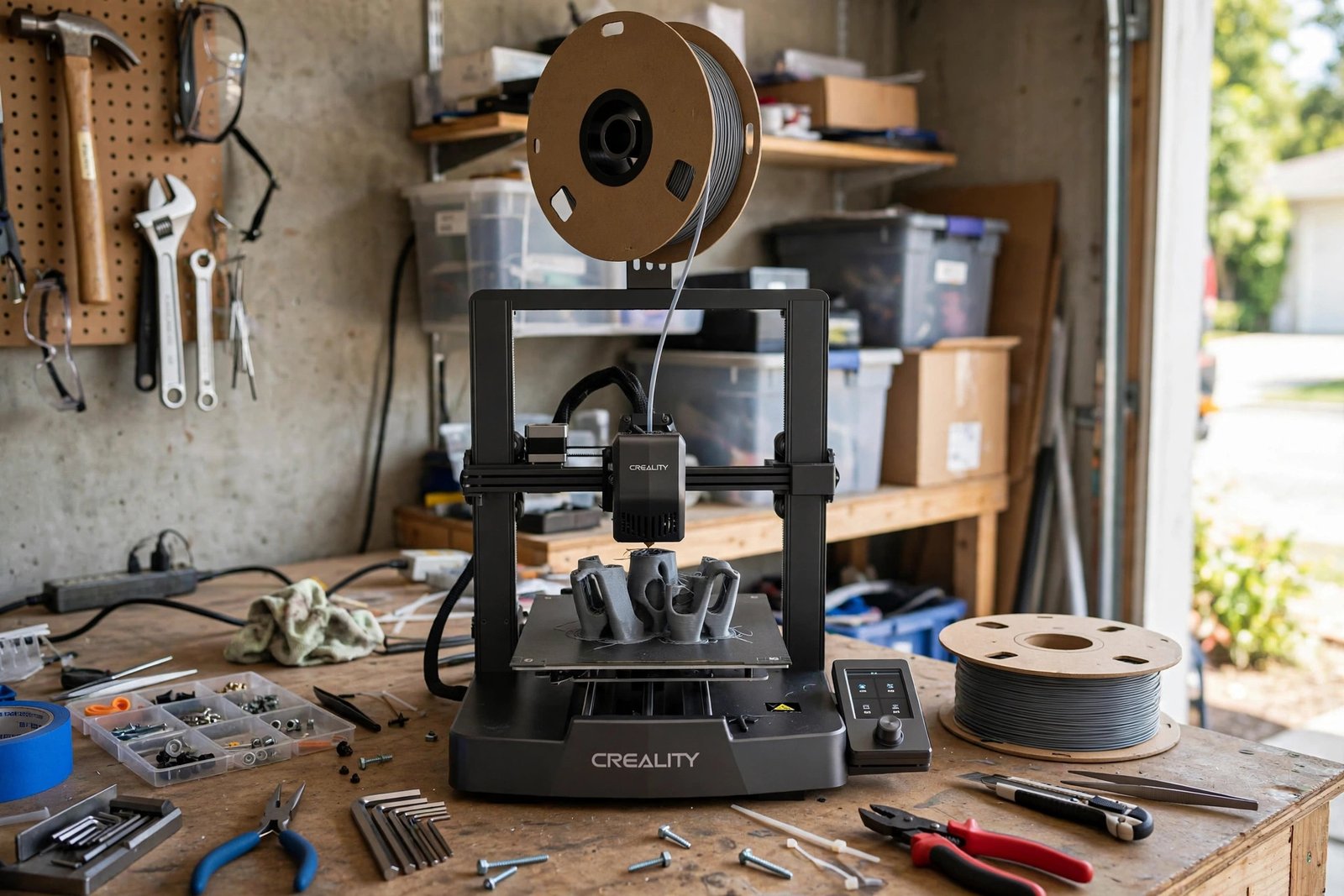
The Ender 3 V3 SE is the classic budget route into the hobby, and it still earns its place among the best 3D printers for beginners, even though it has come a long way from the fiddly machines the Ender name used to mean. It levels its own bed with a touch sensor, loads filament automatically, and prints at a respectable speed on a 220 by 220 by 250 mm bed. The direct extruder handles everyday PLA and PETG well, and the dual Z-axis keeps the frame steady as prints get taller. This printer is for hobbyists who enjoy learning how their machine works and want the lowest-cost way into real printing. It is not for someone who wants everything automatic, because it asks a little more patience than the Bambu machines, especially when a print fails and you have to work out why. Compared with the A1 mini Combo, you get a bigger bed for less money, but you give up the colour unit and the near-total automation.
5. Flashforge Adventurer 5M — Best for Fast Everyday Prints
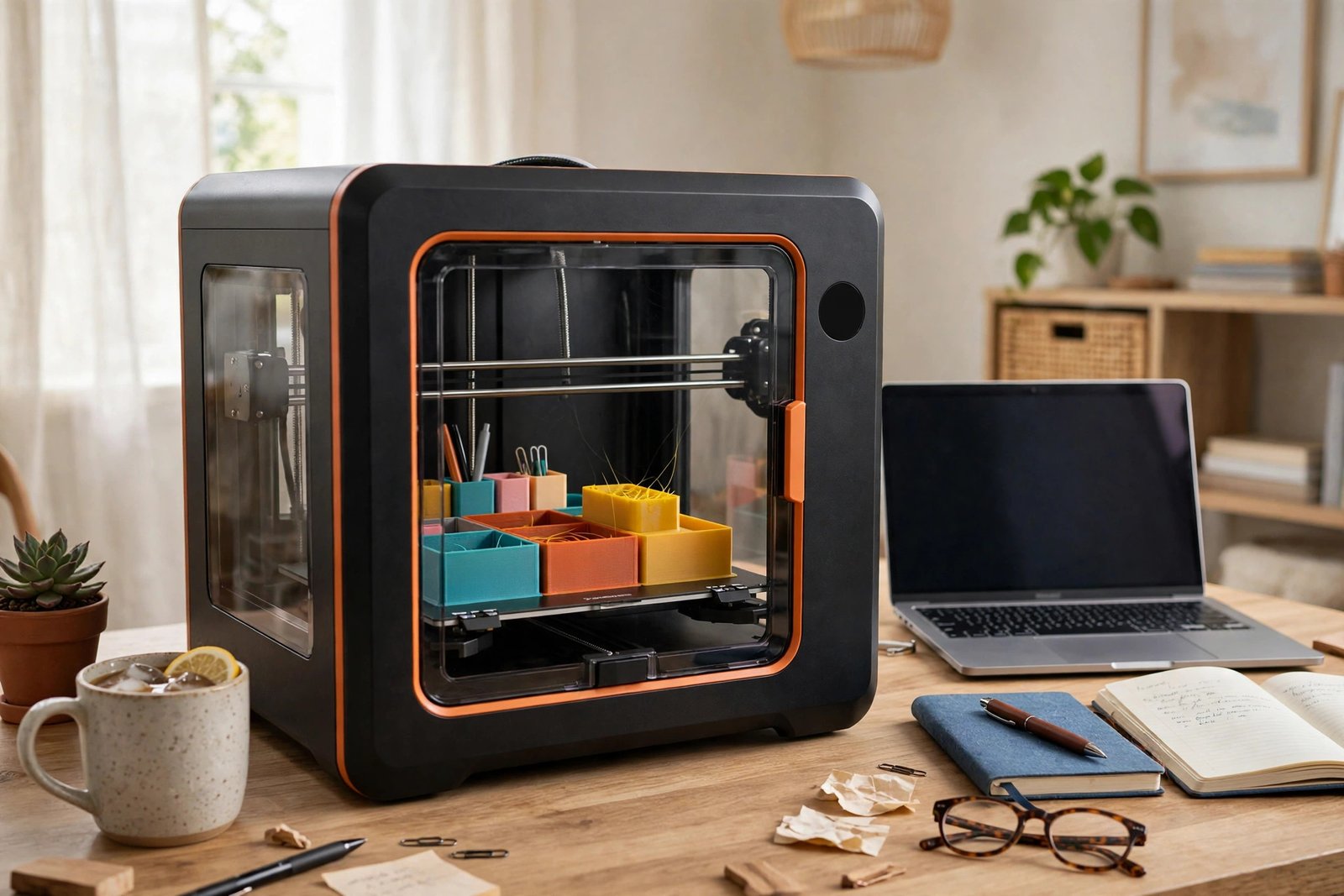
The Adventurer 5M is built for speed and simplicity. It levels itself with one click, swaps nozzles in seconds without tools, and prints fast on a 220 mm cube bed, with a hot end that reaches temperatures high enough for PETG and other stronger filaments. The sturdy CoreXY frame keeps vibration down, which shows in cleaner edges on everyday prints. This printer is for someone who wants quick, reliable prints of useful things, like desk organisers, replacement knobs, and brackets, without waiting around. It is not for multi-colour fans, because it prints one colour at a time and you change filament by hand between colours. Compared with the Ender 3 V3 SE, it feels more plug-and-play and finishes prints noticeably faster, though it gives up the Ender’s huge community of mods and guides. For a first printer that values speed over colour, it is one of the best 3D printers for beginners on this list.
6. Anycubic Kobra 4 Combo — Best for Multi-Colour and Damp Rooms
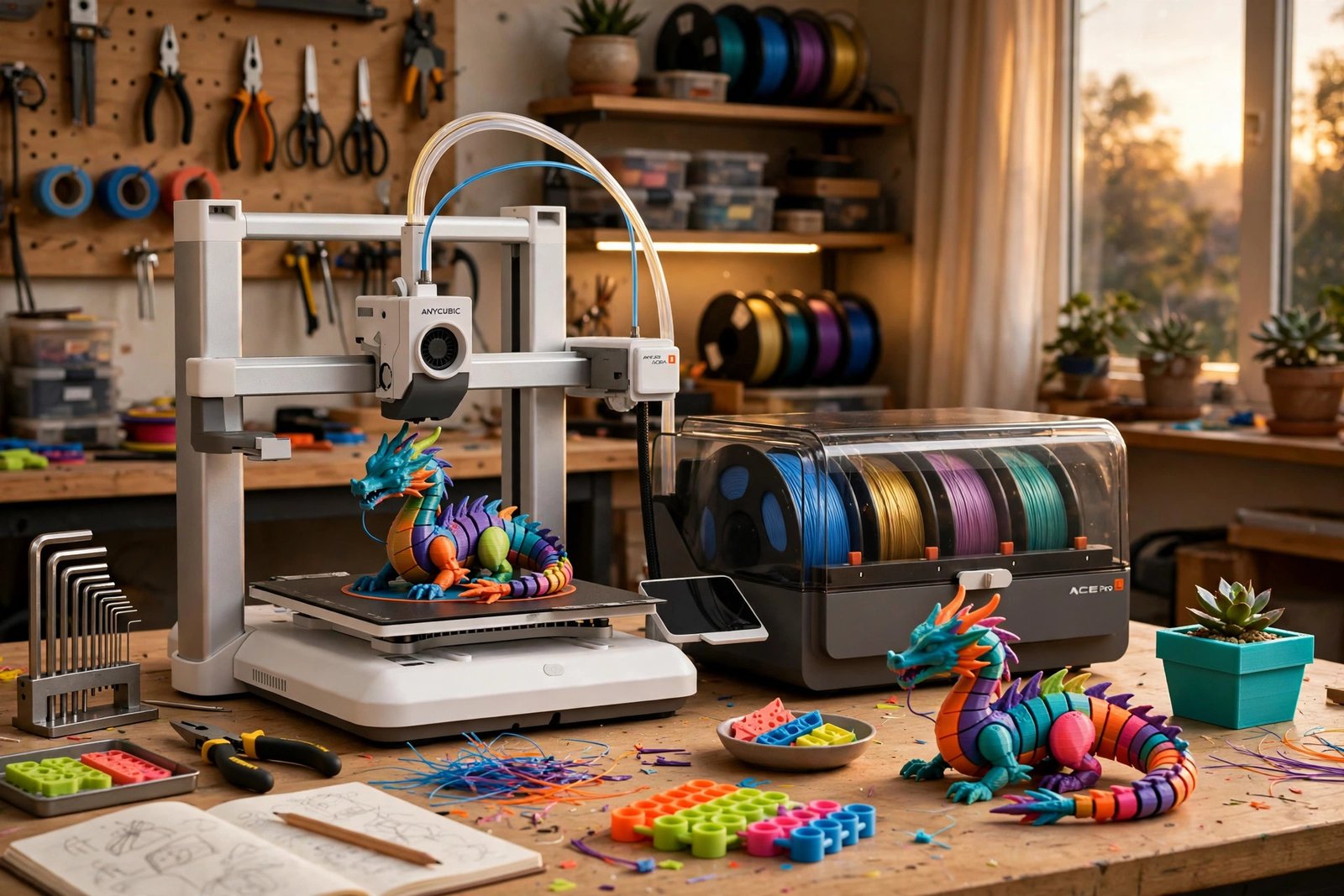
Rounding out the best 3D printers for beginners in this guide, the Kobra 4 Combo pairs a 260 mm cube printer with a colour unit that dries filament while it prints, which is a genuine help if your room is damp or your spools have sat open for months. It levels across 49 points, watches the print with a built-in camera, and prints in four colours out of the box, with room to grow to eight. PLA, PETG, and flexible filament are all supported, though the flexible stuff needs to bypass the colour unit and feed directly. This printer is for makers who want multi-colour prints and live in a humid home, or anyone who likes checking a print from the sofa on camera. It is not for a cramped desk, because the printer plus its colour unit take up real space. Compared with the A1 Combo, you get a bigger build area and filament drying built in, but a larger footprint and a slightly steeper learning curve.
How to Choose Among the Best 3D Printers for Beginners
Start with auto levelling. A printer that levels and calibrates itself removes the single biggest cause of failed first prints, so treat it as essential rather than a luxury. Next, think about build volume. A 180 mm cube covers toys, small gifts, and desk accessories, while a 250 mm or larger bed opens up helmets, vases, and household parts. Enclosed or open is the next call. Open printers are cheaper, lighter, and fine for PLA, which is where every beginner should start. An enclosure earns its keep when you move to tougher filaments or print in a draughty room. On filament, start with PLA because it prints easily and barely warps, then try PETG when you want stronger, more weather-resistant parts. And keep your first prints small. A calibration cube, a tiny toy, or a phone stand teaches you more in an evening than a giant model that fails halfway through. Once you start printing props and parts for videos, our guide to content creator gadgets covers the rest of the kit that pairs well with a printer.
Our Verdict
If you buy one machine from this list, make it the Bambu Lab A1 Combo. It is the easiest route to a good first print, and the colour printing keeps the hobby fun long after the novelty wears off. Short on space, and the A1 mini Combo is the same experience in miniature. Want room to grow, and the enclosed P1S Combo is the one to stretch for. Whatever you pick, the best 3D printers for beginners all share one trait: they let you spend your time printing, not fixing the printer.
Frequently Asked Questions
Which of the best 3D printers for beginners is easiest to set up?
The A1 mini Combo, with the A1 Combo a close second. Both calibrate themselves, load filament with minimal fuss, and are usually printing within half an hour of unboxing.
Do I need an enclosed printer as a beginner?
No. PLA, the filament every beginner should start with, prints happily on an open machine. An enclosure only becomes important when you move to tougher filaments or print in a cold, draughty room.
What filament should I start with?
PLA. It prints at lower temperatures, barely warps, and comes in every colour you can imagine. Move to PETG later, when you want parts that are stronger and can handle a bit of heat.
How big should my first print be?
Small. A calibration cube, a keyring, or a tiny toy will teach you how your printer behaves, and a small failure wastes minutes rather than hours. Save the big models for your second weekend.
Pick the printer that fits your desk and your patience, start small, and enjoy watching your first idea take shape layer by layer.